SQL
-
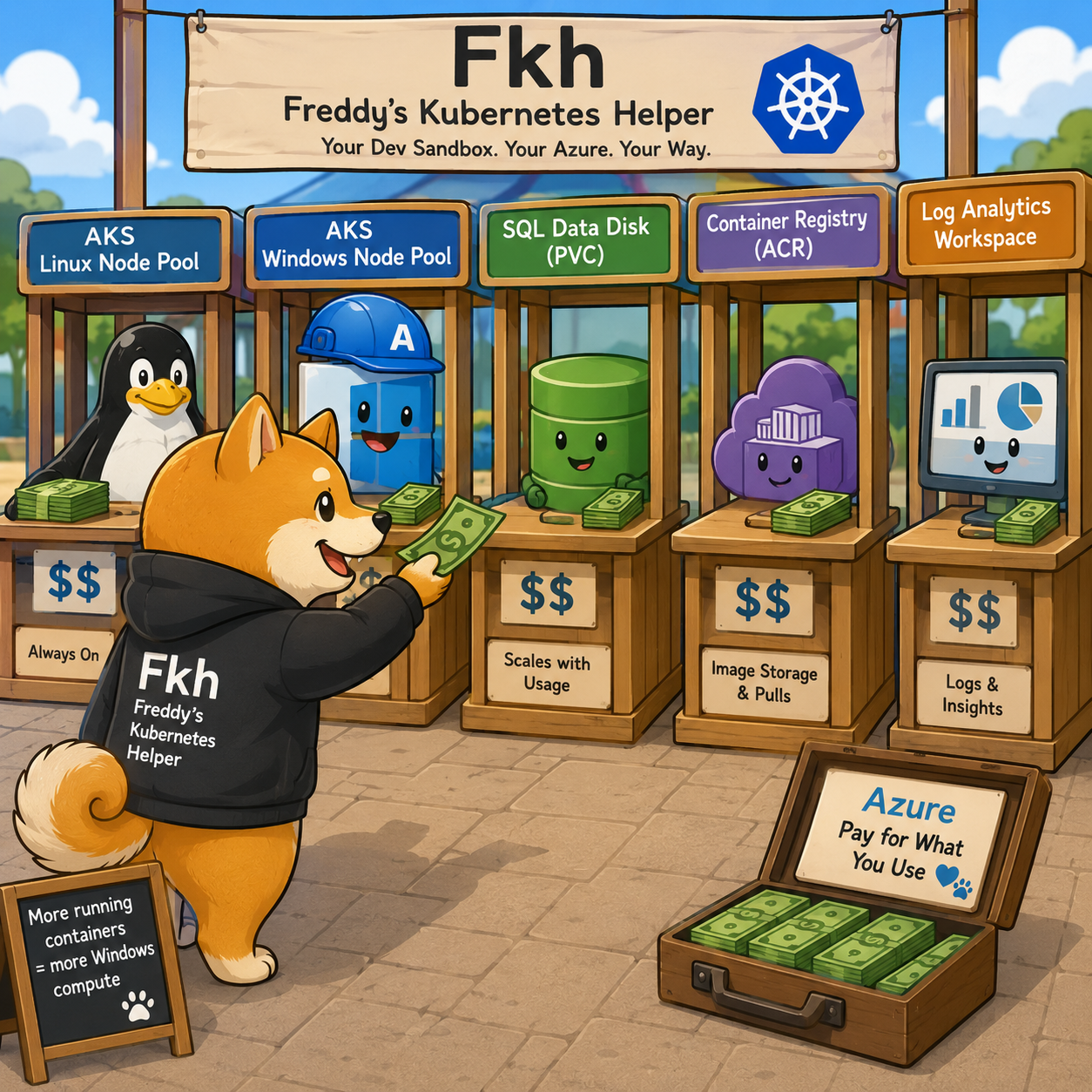
The price of running Fkh (Freddy's Kubernetes Helper)
In my previous post I described the Fkh CLI. One question I get almost every time I show Fkh - Freddy’s Kubernetes Helper is: what does it cost to run? Since Fkh runs entirely in your own Azure subscription, the honest answer is “it depends on your usage” - but that isn’t very helpful, so this post breaks down exactly what has a cost attached, how each part scales as usage grows, and what a realistic monthly bill looks like...
-
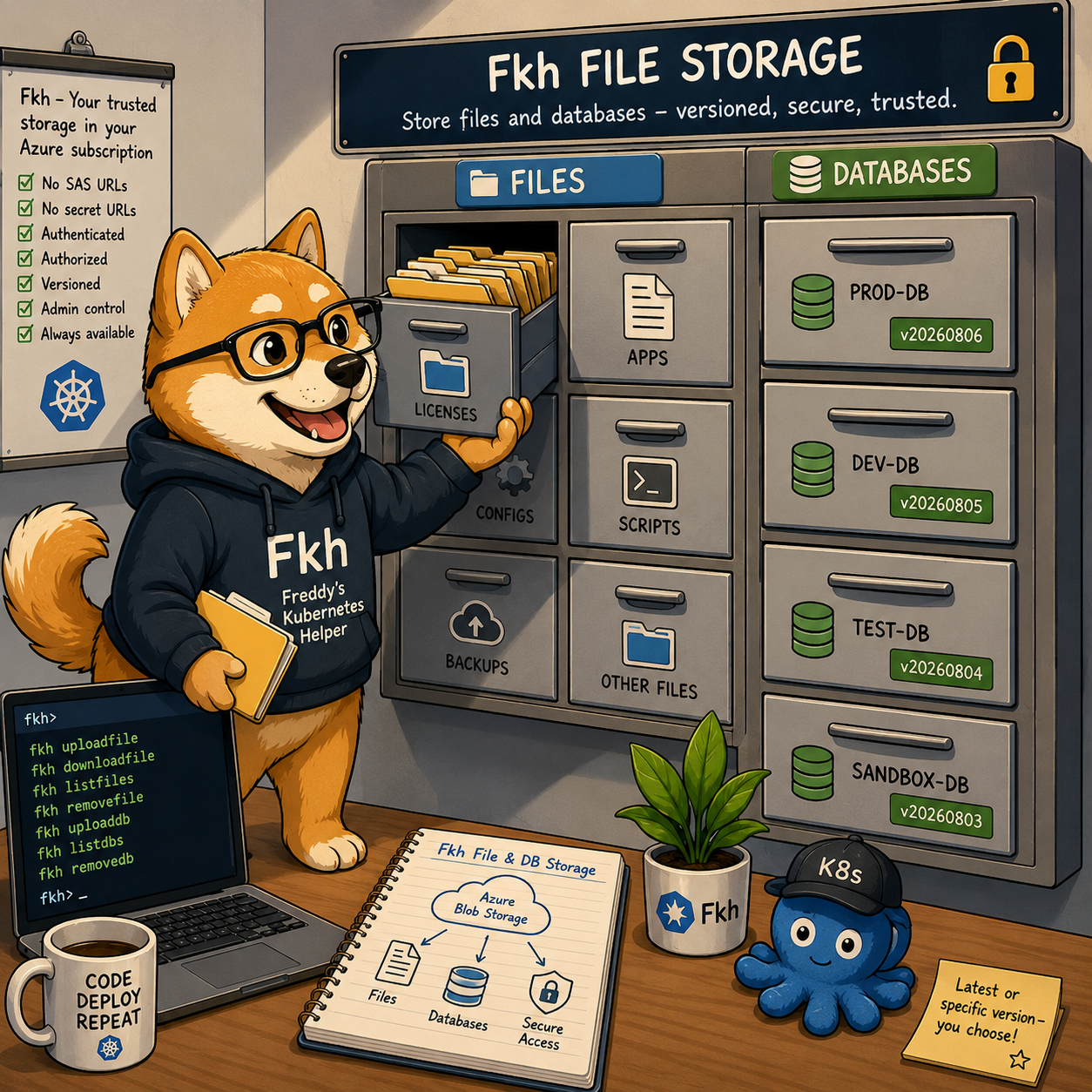
File storage in Fkh (Freddy's Kubernetes Helper)
In my previous post I explained just-in-time database access in Fkh - Freddy’s Kubernetes Helper and promised to go into more detail about the file storage. This post does exactly that. The Fkh file storage basically gets rid of SAS URLs or secret URLs — you have a trusted file storage that you can access wherever you need it. Why file storage? When you work with Business Central containers, there are always files you need to have around - license...
-
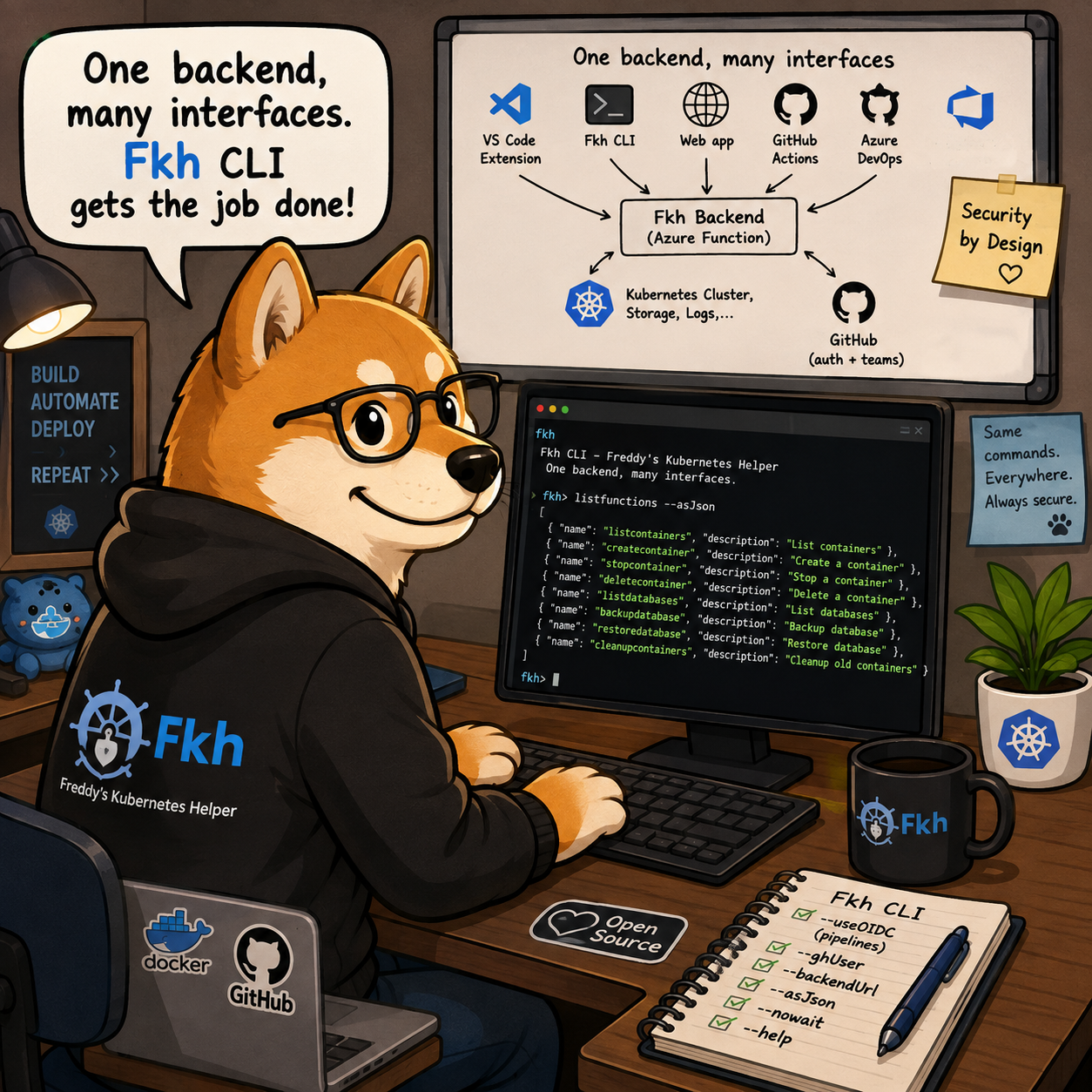
The Fkh CLI (Freddy's Kubernetes Helper)
In my previous post I showed how to run backend commands from VS Code using Fkh - Freddy’s Kubernetes Helper. Obviously, VS Code is not the only frontend for Fkh, there is also a Web App and a CLI. Who knows, in the future, there might be other front-ends (MCP is one I have on my mind - for troubleshooting purposes). One backend, many interfaces The most important thing to understand about Fkh is that all the functionality lives in...
-
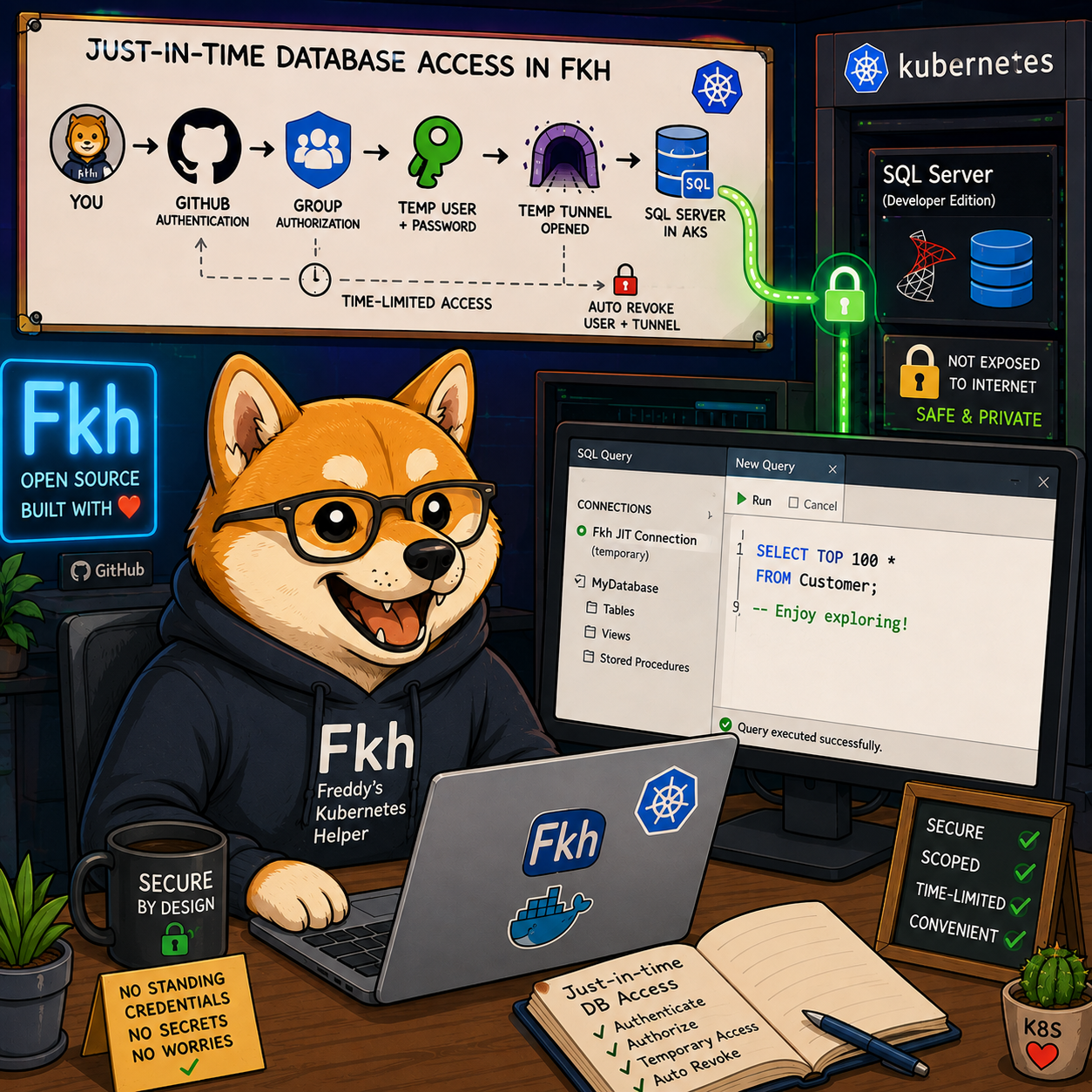
Just-in-time database access in Fkh (Freddy's Kubernetes Helper)
In my previous post I explained the security model of Fkh - Freddy’s Kubernetes Helper and why you can trust it for your development processes. In that post I briefly mentioned just-in-time database access. This post explains what that means and how it works. Why you don’t have direct database access As explained in the security model post, the databases for your containers live on a SQL Server (Developer edition) running inside the Kubernetes cluster in your own Azure subscription....