
What a year it has been!

Roughly one year ago, my “lifetime” employment with Microsoft came to an abrupt end after 23 years of service – and what a year it has been…

After publishing my layoff announcement on LinkedIn, which had approximately 1.1 mio views, 7200+ likes and 550+ comments, I decided that my biggest asset was probably my name and reputation. So I created my own company, Freddy.DK ApS, with the goal to stay active in the Business Central community as long as it is rewarding and fun.

And… it has definitely been both rewarding and fun… it is impossible to describe in a few words what I have done, but I will try to list some of the highlights.

Recharging in Greenland

While I truly see my layoff from Microsoft as a gift, it obviously also adds some tension about what’s next. My recommendation to anybody who experience things like this is to pull the plug and recharge, whether you are experiencing Greenland, walking the Camino or doing other adventures is not important, but doing something to clear your mind is truly worth it.

Directions for partners

Torben Kragelund (CEO in the Directions for Partners org) called me before I even announced the layoff and asked me whether I would consider coming and working for the Directions team. The Directions conferences and the Days Of Knowledge events has always been dear to my heart, so I didn’t hesitate in accepting.

And… it has been an amazing journey. From being “on the other side”, to being part of the team has been truly rewarding and you suddenly realize the amount of work needed to pull off conferences like Directions EMEA. I do think that the Directions conferences and the Days of Knowledge events are more important than ever and we need to ensure that we keep evolving these events for partners throughout the world to ensure that the community stays strong and relevant.

I truly believe that every Business Central professional should visit at least one of these events, being Directions, Days Of Knowledge or BC Days – the payback is instant.

Microsoft MVP

From Least Valuable Employee to Most Valuable Professional in less than a year:-)

Having worked with all the Business Central MVPs for a decade, I’ve grown to truly value and respect this group of people. Becoming an MVP and joining the group was a huge milestone for me and I will try to honor this badge to be eligible to many renewals.

BTW – before actually becoming an MVP, I received my MVP of the MVPs award from the Microsoft MVPs. That award is dear to my heart, THANKS!

AL-Go for GitHub

During my last years at Microsoft, I created a product called AL-Go for GitHub and as you might know, this product has now grown to become a central part of app development in Microsoft and with many partners.

While AL-Go for GitHub is plug-and-play, there are still a million settings and ways to setup AL-Go to match your needs. One of my first customers was Bunker Holding Group, who had a very large and impressive setup on Azure DevOps and wanted to move to AL-Go for GitHub. While this sounded easy, it came with a lot demands, requests and new ideas, which wasn’t part of AL-Go.

One of their problems was that their IT department didn’t want people to have admin rights, nor did they want to have people running Docker. This lead to the development of Fkh – Freddy’s Kubernetes Helper, which basically ensures bunker that they are ready when Microsoft stops supporting BcContainerHelper.

So, if you need help on implementing, maintaining or understanding AL-Go for GitHub, you probably won’t find anyone more qualified than me:-)

Fkh – Freddy’s Kubernetes Helper

As already mentioned, the idea behind Fkh (pronounced F-cage) came from my meetings with Bunker Holding to get over the love/hate relationship with Docker running on developer PCs.

Fkh (https://github.com/Freddy-DK/Fkh) is Open-Source and installs in your own Azure Subscription.

Fkh lets authorised GitHub users work with Business Central containers and perform developer tasks on demand — directly from VS Code, a CLI, a Web frontend, or GitHub Actions workflows.

A GitHub-authenticated Azure Function acts as the provisioning gate; Terraform manages all Azure/Kubernetes infrastructure, all Docker containers are running in a Kubernestes cluster, in which you will have a Linux node running MS SQL Server with a persisted drive ensuring that containers doesn’t loose their data and a Windows node running standard Business Central containers connecting to the Linux SQL Server.

Expect many more blog posts about this product…

AI

The impact on AI on the global workforce is/will be huge and it is important to look at AI from many angles. It is very common to look at AI from the angle that AI is going to take our jobs, but I truly believe that there is more to it than that.

AI will definitely destroy jobs, but it will also create jobs and it will redesign jobs. I do think however that tasks and not occupations are the real unit of impact and that the upskilling of the workforce is one of the most important things we can do. World Economic Forum says that 59% of the workforce will need upskilling and training in AI by 2030.

So, while many Tech companies are riding the front of the wave and developers are throwing themselves into agentic development and autonomous agents, many “normal” companies are left in the calm water, not knowing that whether the wave will hit them, thinking: “What now?”
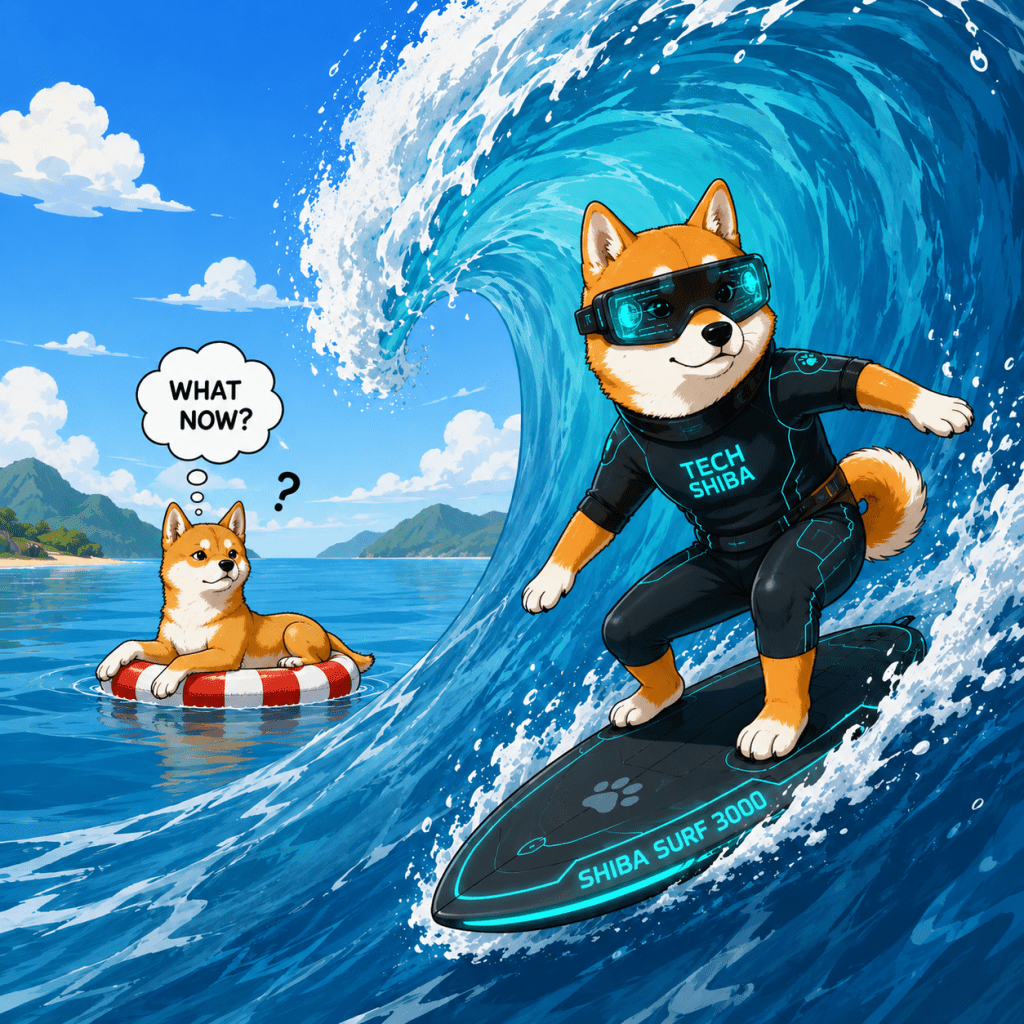
This is one of the reasons why we started a collaboration with Knowledge Partner and are offering AI training for their customers, to get them up to speed on how to use the tools they already have access to, boost personal productivity, but primarily to get an understanding of AI and what it can do for you – in order to get people to think about AI and agents. Read more about this here: https://dalgaskompas.com/

We are planning to extend this collaboration to other partners; running AI training in their name for their customers.

Why Shibas?

One question I got from a lot of people is: “Freddy, why are you always displaying images of a fox?”

It is not a fox, it is a Shiba Inu and the simple reason is, that I am the happy owner of a Shiba Inu, which is probably the most intelligent dog breed that exists, Shiba Inus are famously independent, stubborn, and cat-like and there is a famous saying that goes: a dog may have a master; a Shiba has staff.

The future

The future for Freddy-DK ApS revolves around 4 major pillars:

  • Directions for partners conferences and events
  • Helping customer and partners with AL-Go for GitHub and Freddy’s Kubernetes Helper (Fkh)
  • AI Training and helping partners and customers with their challenges in this area.
  • Community contributions (blogging, vlogging, speaking, open-sourcing etc) to help keep the Business Central community strong and vibrant.

Enjoy

Freddy Kristiansen
All good things come to an end

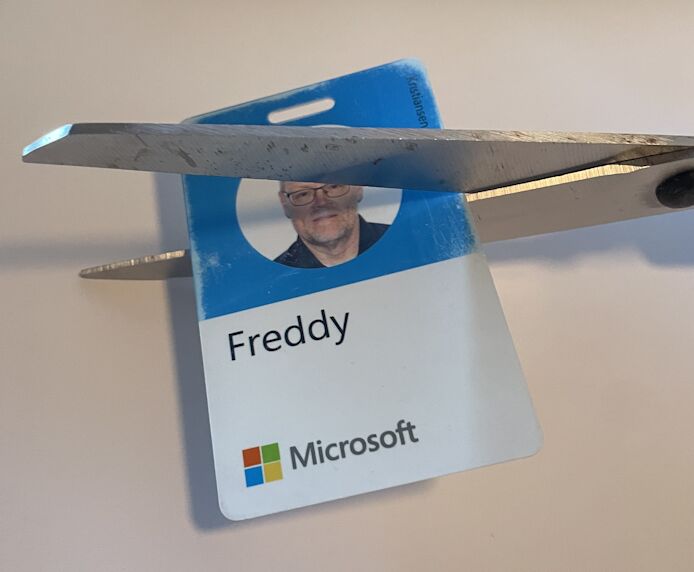
After 23 engaging years at Microsoft – and having made it through at least 10 rounds of layoffs – my name was pulled from the hat, and I was asked to pack my things and leave.

That is obviously not entirely how it went, but it definitely is how it felt.

On the bright side, this gives me the chance to pursue a long-overdue dream: starting my own business and helping customers and partners in areas where I can truly make a difference.

Running my own business also gives me the flexibility to prioritize myself, my family and our overall wellbeing to a higher extent than has been possible for a long time.

So, what’s next?

As already stated, I’m starting my own business and will soon begin offering services to customers and partners who could use my help – more details coming soon.

I’ll also be dusting off my golf clubs, getting back into a regular exercise routine, and hopefully hitting the bike trails again.

But first, a break: I’ll spend June wrapping things up, then head to Greenland and Iceland in July with my wife and close friends – finally taking a real vacation, without a Microsoft laptop.

Follow me here on my blog, on LinkedIn or on my future homepage, which I will share here as well.

Godspeed

Freddy

20 years…

On May 1st, 2002, I walked through the doors of Navision in the Offices in Vedbæk for the first time. A few days earlier rumors had started that Microsoft was going to acquire Navision, but things weren’t settled yet.

The Acquisition was formally announced on May 7th and was finalized on July 11, 2002, so my 20-year anniversary as a Microsoft employee is on July 11th, but for me, May 1st will always be the date where I started working with ERP software.

I have worked with a lot of amazing people on a ton of amazing stuff, and I am still as passionate about what I do as I have ever been.

Steve Jobs once said that we’re here to put a dent in the universe. Well, I might not have put a dent in the universe, but I definitely put a dent in the way Business Central developers are working on a daily basis.

While the Microsoft mission is to empower every person and every organization on the planet to achieve more, I can safely say that I have and am empowering developers and partners on the planet to achieve more, trying to do my part…

There are a lot of memorable moments during the last 20 years, but the one that stands out is from Convergence in Munich 2006, where Bill Gates talked about Business Solutions and had a demo of a Shop Floor control performed on stage by our GM Darren Laybourn. After the keynote, the leader of Business Solutions, Satya Nadella, called Bill over to meet and greet. Humbled to have been in the company of these great people who both then and now has really transformed how people work and how people use IT.

Nobody knows what the future brings, but I will do my utmost to make the most out of it…

Thanks for all the fish

Freddy

Docker and Business Central

Over the last few months, there has been quite a few blog posts and discussions on social media based on blogs posts from Docker, Microsoft and Mirantis indicating new pricing structure. In this blog post I will try to make the options for running Business Central on Docker clear.

The two major products used for running Business Central containers are Docker Desktop and Mirantis Container Runtime (formerly known as Docker Engine – Enterprise). Both products include Docker Engine and adds a number of additional components and features which might be relevant for you. Docker Engine can however also be installed alone and is sufficient for running BcContainerHelper and the Business Central Generic image.

This blog post will NOT just tell you how to install Docker Engine, as that might not be the right option for you. Instead, I will walk through the different options you have and you will have to decide on what is best for you.

Continue reading

Directions EMEA 2019

Update 2021/2/10: Microsoft stopped creating images for Docker in the summer of 2020. We now publish artifacts, which can be used to spin up containers and BcContainerHelper has replaced NavContainerHelper. This blog post reflects the old way of using NAV/BC on Docker and references NavContainerHelper, which is outdated.

Vienna is the place to be next week for NAV and Business Central professionals. Directions EMEA 2019 start Wednesday and runs through Friday.

Seven

This year seven is my lucky number, as I will be appearing in sessions a total of 7 times. If you want to avoid my sessions, then the following sessions are the ones you shouldn’t join… – if you end up joining any of the sessions, I will do my utmost to make sure you don’t waste your time.

Wednesday 14:15 in HALLE1 – MSBK039: Getting Started with Containers

This session is for people who are new to Docker or people who have experienced issues running Docker. I will have some tips and tricks for how you can get started with Containers.

Wednesday 17:30 in HALLB – MSBK041: Getting the Most Out of Containers

This session is for people who have been running Docker for some time, but would like some tips and tricks on what containers can do for them.

Thursday 14:45 in HALLE1 – MSBK026: Continuous Integration and Continuous Deployment with Azure DevOps

Really looking forward to host this session together with Christian Heide Damm, where we will try to paint a picture of how our partners can setup CI/CD to increase developer productivity, product quality and customer happiness.

Thursday 16:00 in L2 – MSTH143: Visual Studio Code and AL Language

In this Town Hall, we will try to answer your burning questions on how to develop apps for Business Central using Visual Studio Code and the AL Language.

Friday 10:45 in N – MSWS106: Setting Up CI/CD on Azure DevOps

If you found the CI/CD session on Thursday exciting, then this workshop will take you through how you can setup CI/CD for your own project.

Friday 13:30 in L2 – MSTH113: Town Hall: Your Solution Roadmap to SaaS

In this Town Hall, we will try to answer your burning questions about the lifecycle of an app. From designing and developing to running and upgrading. Versioning, dependencies, packaging, testing and AppSource submission.

Friday 14:30 in HALLC – MSTH123: Meet the MVPs

In this Town Hall, you will have the opportunity to meet some the the Microsoft MVPs visiting Directions EMEA 2019 and ask them questions on how they see the world. My role is purely hosting and I will try to say as little as possible.

TGIF

Even though I am really looking forward to this week, I also know that Friday at 15:30 – I will say: Thank God It’s Friday and be on my way to the airport. The week following Directions is autumn vacation in Denmark – looking forward to spend some days with my family.

See you in Vienna!

Freddy Kristiansen
Technical Evangelist

Blogging about Wave 2

Update 2021/2/10: Microsoft stopped creating images for Docker in the summer of 2020. We now publish artifacts, which can be used to spin up containers and BcContainerHelper has replaced NavContainerHelper. This blog post reflects the old way of using NAV/BC on Docker and references NavContainerHelper, which is outdated.

Update – with the release of the public preview (described in this blog post: https://cloudblogs.microsoft.com/dynamics365/it/2019/09/04/business-central-2019-release-wave-2-preview/) the NDA has been lifted.

One month ago, we started making insider builds of wave 2 available on Docker and even though the insider builds are subject to a clear NDA, I still see people blogging about features in wave 2. Continue reading

You are running a container which is xx days old…

Update 2021/2/10: Microsoft stopped creating images for Docker in the summer of 2020. We now publish artifacts, which can be used to spin up containers and BcContainerHelper has replaced NavContainerHelper. This blog post reflects the old way of using NAV/BC on Docker and references NavContainerHelper, which is outdated.

Recently, when running an instance of a Microsoft Dynamics NAV Docker image from the docker hub, you will get a message like:

You are running a container which is 78 days old.
Microsoft recommends that you always run the latest version of our containers.

What does this mean? what happens if you just ignore this? and what can you do about it? Continue reading

NAV and Business Central Docker images moved to Microsoft Container Registry…

Update 2021/2/10: Microsoft stopped creating images for Docker in the summer of 2020. We now publish artifacts, which can be used to spin up containers and BcContainerHelper has replaced NavContainerHelper. This blog post reflects the old way of using NAV/BC on Docker and references NavContainerHelper, which is outdated.

If you are using public Microsoft Dynamics NAV or Microsoft Dynamics 365 Business Central on Docker, this blog post contains important information. Continue reading